How Airflow in a Paint Finishing System Impacts Product Quality
Airflow is one of the most critical factors in the industrial paint finishing process that affects the quality of a coated product or component. The way the air moves through your finishing system affects the adhesion, consistency, and overall appearance of your products whether you are using liquid or powder coatings. Understanding and ensuring the right airflow is not just about flawless finishes – airflow also affects safety and unique compliance requirements for every industry.
The Role of Airflow in Paint Finishing
Airflow in a paint booth or finishing system is responsible for many key functions:
-
Removing overspray, dust, or contaminants
-
Controlling temperature and humidity
-
Ensuring even application of coatings
-
Maintaining proper curing and drying
How Airflow Affects Finished Products
Airflow affects all aspects of the finishing process including:
-
Surface Preparation: Consistent airflow removes contaminants to reduce defects and ensure a uniform finish
-
Coating Consistency: Balanced airflow ensures even coverage and helps maintain consistent coating thickness across the surface
-
Adhesion and Coating Performance: Proper airflow ensures coatings bond to the surface and prevents peeling and cracking
-
Drying and Curing Efficiency: Airflow impacts the evaporation of solvents in liquid coatings, helps with heat distribution for curing, and prevents uneven temperatures
Types of Airflow in Paint Finishing Systems
There are different types of airflow depending on the type of product you are finishing, your facility layout, and finishing capabilities. The most common airflow types include:
-
Cross-draft: Air moves horizontally across the surface, providing a lower-cost, simple design. This airflow pattern can be prone to contamination or uneven finishes.
-
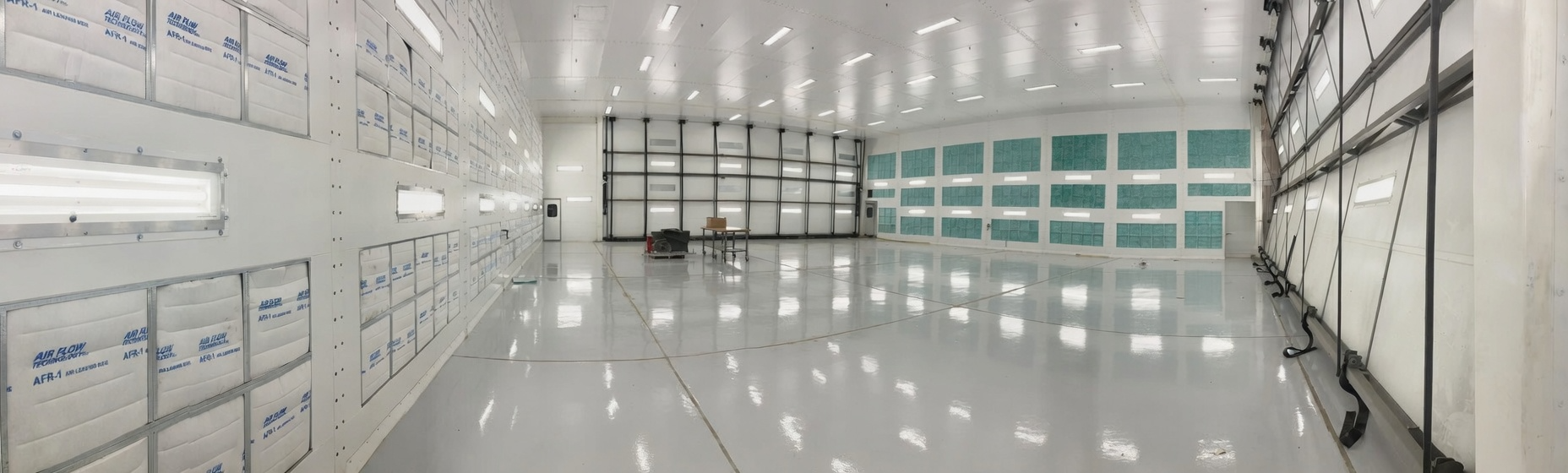
Downdraft: Air moves vertically from the ceiling to the floor, creating superior contamination control. This airflow pattern is ideal for high-quality finishes and large components.
-
Semi-Downdraft: This pattern is a hybrid design, balancing performance with cost. This is common in mid-range industrial applications.
Best Practices for Optimizing Airflow
Regular maintenance is critical to ensure the airflow is optimal for your finishing environment. Here are some key maintenance checks to keep your equipment running smoothly:
-
Maintain filters regularly to prevent airflow restriction
-
Balance intake and exhaust systems for consistent pressure
-
Test air flow regularly to ensure proper flow rates
-
Control temperature and humidity within the finishing system
Airflow is a key component of your finish quality and affects every aspect of your finished product. Investing in a properly designed and maintained system will ensure consistency and quality across your production line. Rohner designs and builds finishing systems for your specific process. We can also help integrate new components into your existing system to improve your finishing process. Talk to our team about your airflow challenges to see how we can help.
Have questions? Please contact the Rohner team: info@rohner-usa.com