Choosing the Right Paint Booth for Your Facility Footprint and Production Capacity
When designing a paint finishing system, one of the more important factors is the type of paint booth you select. Your ideal paint booth configuration depends on several factors, including the available space in your facility, production volume, part sizes, and the ability to scale in the future. If your paint booth is too small it could create delays or bottlenecks, while a larger system could result in unnecessary operating costs or capital expenditures. Understanding what booth types are best for your operations is the key to maximizing efficiencies, improving your finish quality, and getting the most out of your facility footprint.
Getting Started: What are your Production Requirements?
Before you start looking at booth designs, there are several questions that need answers. What are the dimensions and weights of the parts being finished? How many parts need to be processed during each shift? Is your production continuous or batch-oriented? How much floor space do you have available?
The answers to those questions are the starting point to figure out what paint booth configuration will work best for your production and facility space. Here are some common booth configurations based on your production volume and available facility space.
-
Smaller Footprints and Lower Production Volumes: Open-face paint booths are a very common and cost-effective starting point for manufacturers with limited floor space and smaller production volumes. There is a lower initial investment, smaller footprint, and easier access for operators.
-
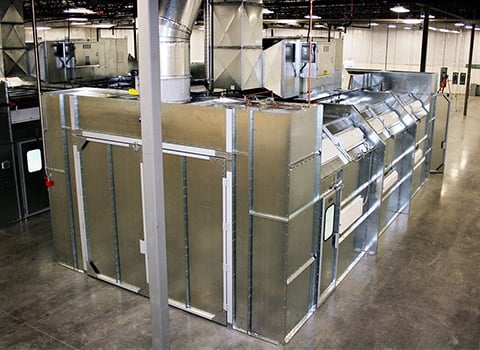
Optimizing Floor Space for Medium Production Volumes: Cross-draft booths are one of the most space-efficient closed booth designs available. They are used for medium production volumes and have lower installation costs than downdraft systems with better finish quality than open-face booths.
-
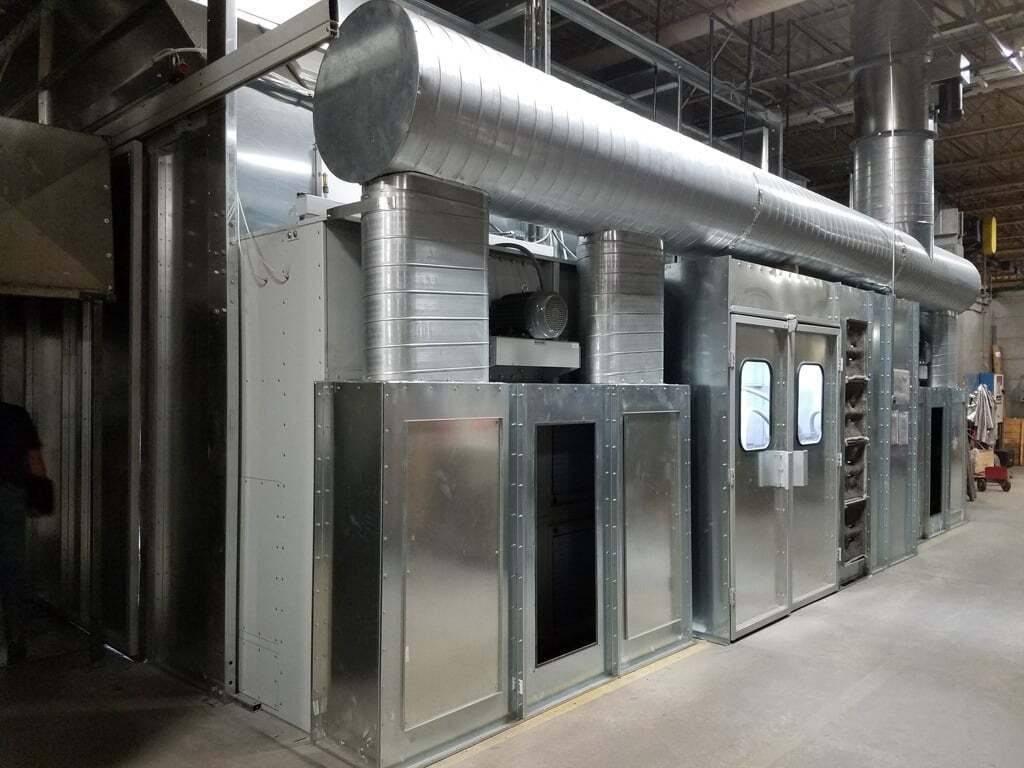
Moderate to High Production Environments: Side-draft booths are used for medium to high volume production in the automotive and aerospace industries, with improved finish quality and better overspray control. They are a higher investment than a cross-draft booth with more facility space needed for exhaust chambers, but they are less expensive than a full downdraft booth.
-
Premium Finishing and High Production Environments: Downdraft booths are used for high performance and best quality finishes in the aerospace and defense industries, automotive production, and premium finishing operations. The vertical airflow minimizes overspray, removes contaminants, and provides superior finish quality. Downdraft booths have the largest footprint requirements and higher operating costs, in addition to floor pits or elevated exhaust designs.
Planning for Future Growth and Scale
If you are designing a new finishing system or integrating new equipment into your existing system, it’s important to consider your future growth plans and ability to scale. As your production demands grow, your booth today may not be able to accommodate your needs in the future. Design a system that can grow as you scale production volume and prevent costly modifications or downtime in the future.
Every facility has unique production requirements, challenges, and space constraints. Rohner designs and builds custom paint finishing systems for your specific applications and production volumes. Our engineering team can audit your existing system and identify ways to integrate new equipment, replace outdated equipment, and help you optimize your operations. Talk to our team about cost-effective, scalable finishing solutions for your facility.
Have questions? Please contact the Rohner team: info@rohner-usa.com